
Landscapers know the pattern. A packed spring and summer, then a winter when the work slows and the owner's pay becomes whatever is left in the bank.
Paying yourself from the bank balance feels natural, but it usually means overpaying yourself in July and squeezing yourself in January. Your household bills don't take the winter off.
A steadier way: pay yourself from a plan.
1) Start with the year. Use last year's monthly profit and loss and this year's sales goals to estimate profit for the next 12 months.
2) Set aside first. Taxes (ask your tax preparer what to set aside), a cash cushion for the slow months, and any planned equipment.
3) Divide what's left by 12. That's your steady monthly owner pay.
4) Let the business hold the swings. Busy months refill the cushion. Slow months draw it down. Your paycheck stays the same.
5) Check it every quarter. If the year runs ahead or behind the plan, adjust the number on purpose, not by accident.
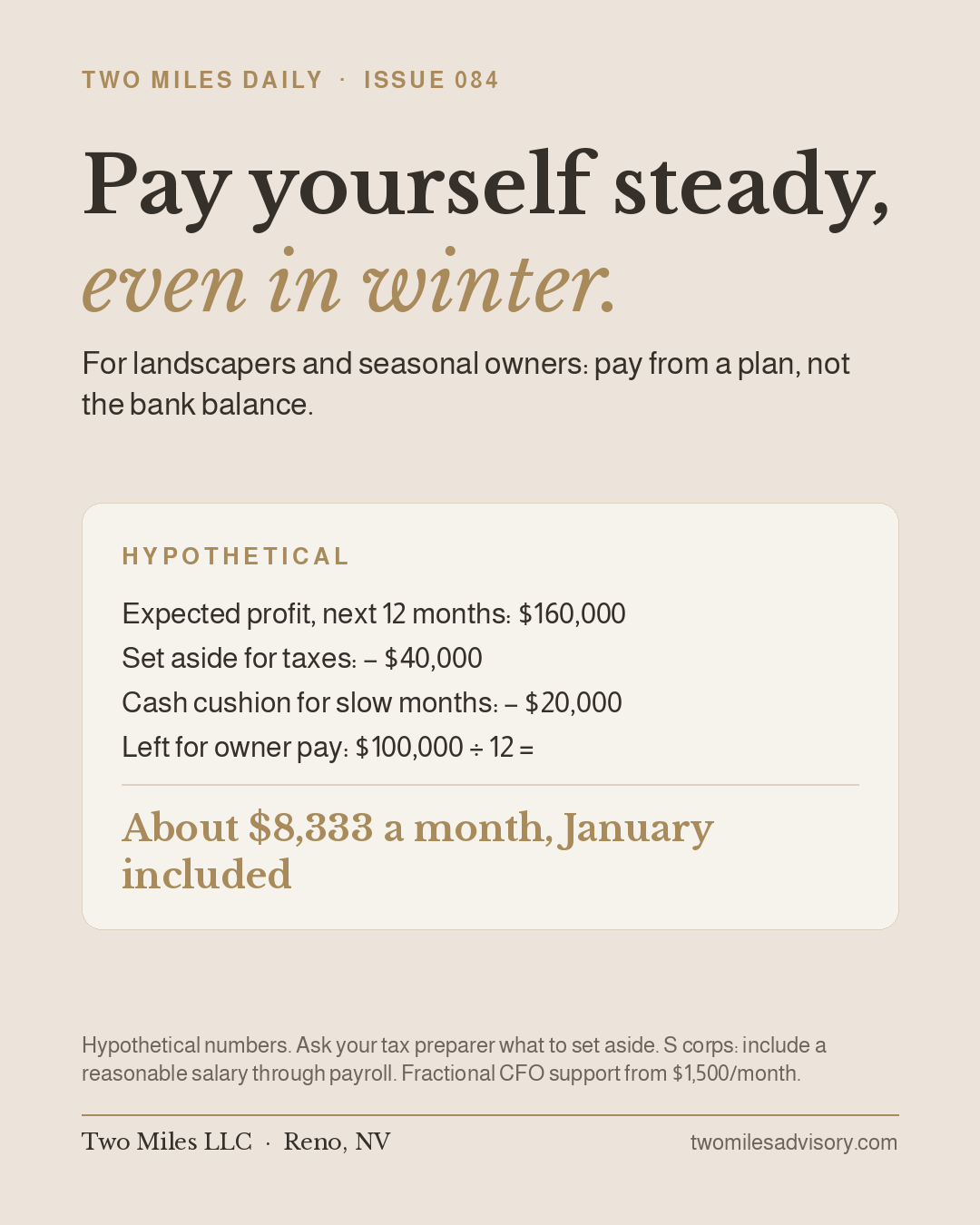
A hypothetical example: a landscaping owner expects $160,000 of profit over the next 12 months. They set aside $40,000 for taxes and keep $20,000 as a cushion. That leaves $100,000, or about $8,333 a month, every month, including January.
If your business is an S corporation, your plan needs to include a reasonable salary paid through payroll before you take distributions. That's an IRS requirement, and your tax preparer can help you set the number.
— Rachel, Two Miles LLC