
Two Miles Daily, Issue 063: Before the Snow Flies, a Fall Catch-Up Plan for Your Books
There's a stretch every fall in Reno when the cottonwoods along the Truckee turn gold, the mornings get sharp, and everyone starts glancing up at Mt. Rose to see if there's snow yet.
For some local businesses, it's also when things slow down enough to breathe. Outdoor crews like landscapers, painters, concrete and roofing often have their busiest stretch in summer, while some trades, like HVAC, get busier as the weather turns. Either way, fall is a good time to look at the books before December 31 gets here.
Hypothetical: a Sparks landscaping owner had a great season. The trucks were out every day, the crew was booked solid, and the books stopped somewhere around May. Nothing is wrong exactly. It's just been months since anyone reconciled anything.
If that sounds familiar, here's a catch-up plan:
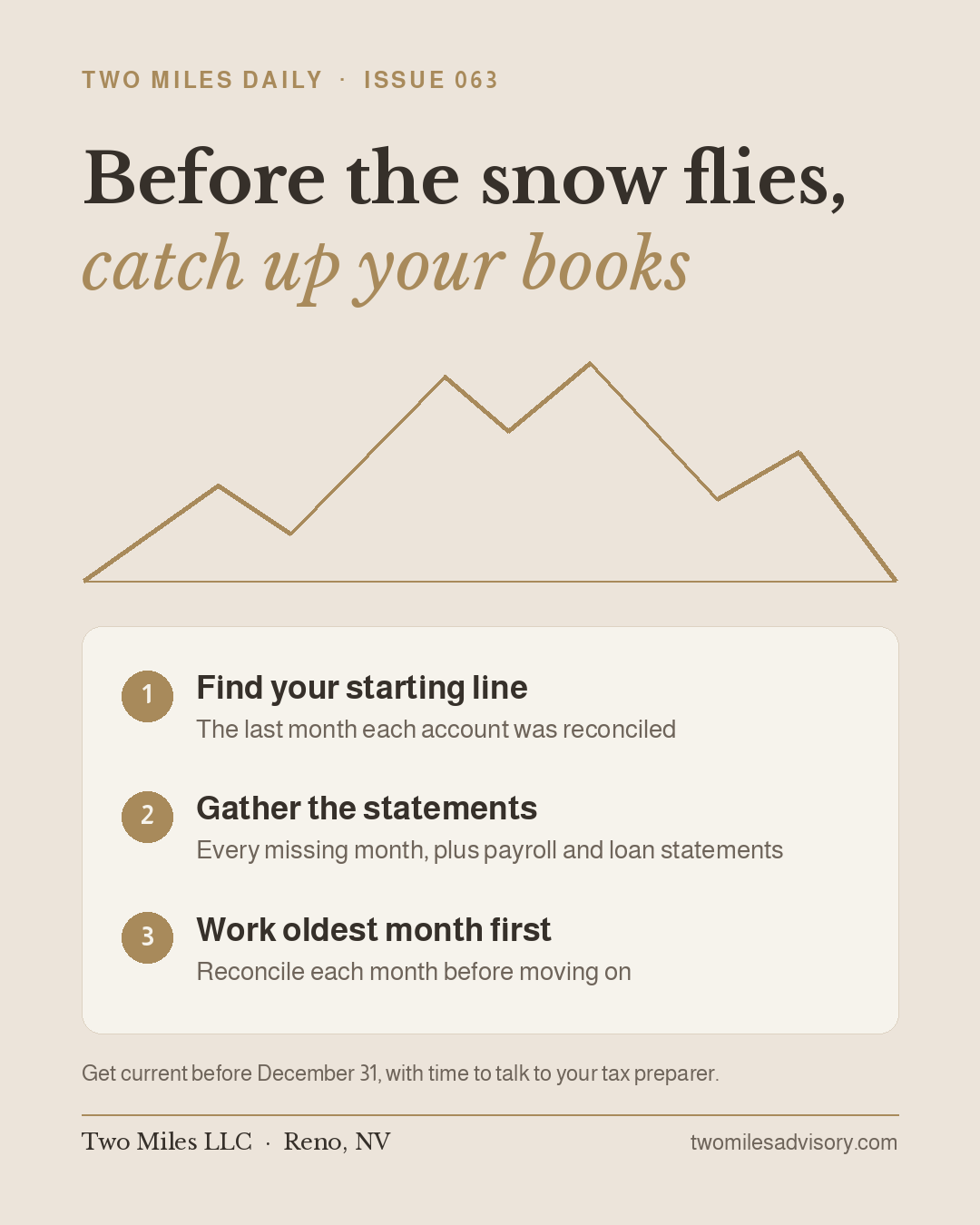
Find out how far behind you are. For each bank account, credit card and loan, what's the last month that was reconciled? That's your starting line.
Gather the statements. Download PDF statements for every missing month, along with payroll reports and any loan statements. It's much easier to have them all in one folder before you start.
Work oldest first, and reconcile each month before moving on. It's tempting to jump to the current month. Don't. Each month builds on the one before.
Keep an "I don't know" list. Unclear charges, mystery deposits, cash spent on materials. Answer them in one sitting instead of stopping every ten minutes.
Look at year-to-date before year-end. Once you're caught up, you can see what the year actually looks like while there's still time to talk with your tax preparer about it.
Collect any missing W-9s now (see Issue 059), while subs are still easy to reach.
Pick a rhythm for winter. Monthly is easiest. Catching up once a year can cost more than staying current.
Catching up isn't a judgment on how you ran the season. It's what happens when the work comes first, which it usually should.
If your books stopped somewhere around spring and you'd like help getting them current before year-end, send me a message through the Contact page. Tell me roughly how far behind you are, and we'll figure out the next step.
— Rachel, Two Miles LLC