
Two Miles Daily, Issue 061: For Realtors, the Expenses That Disappear Between Closings
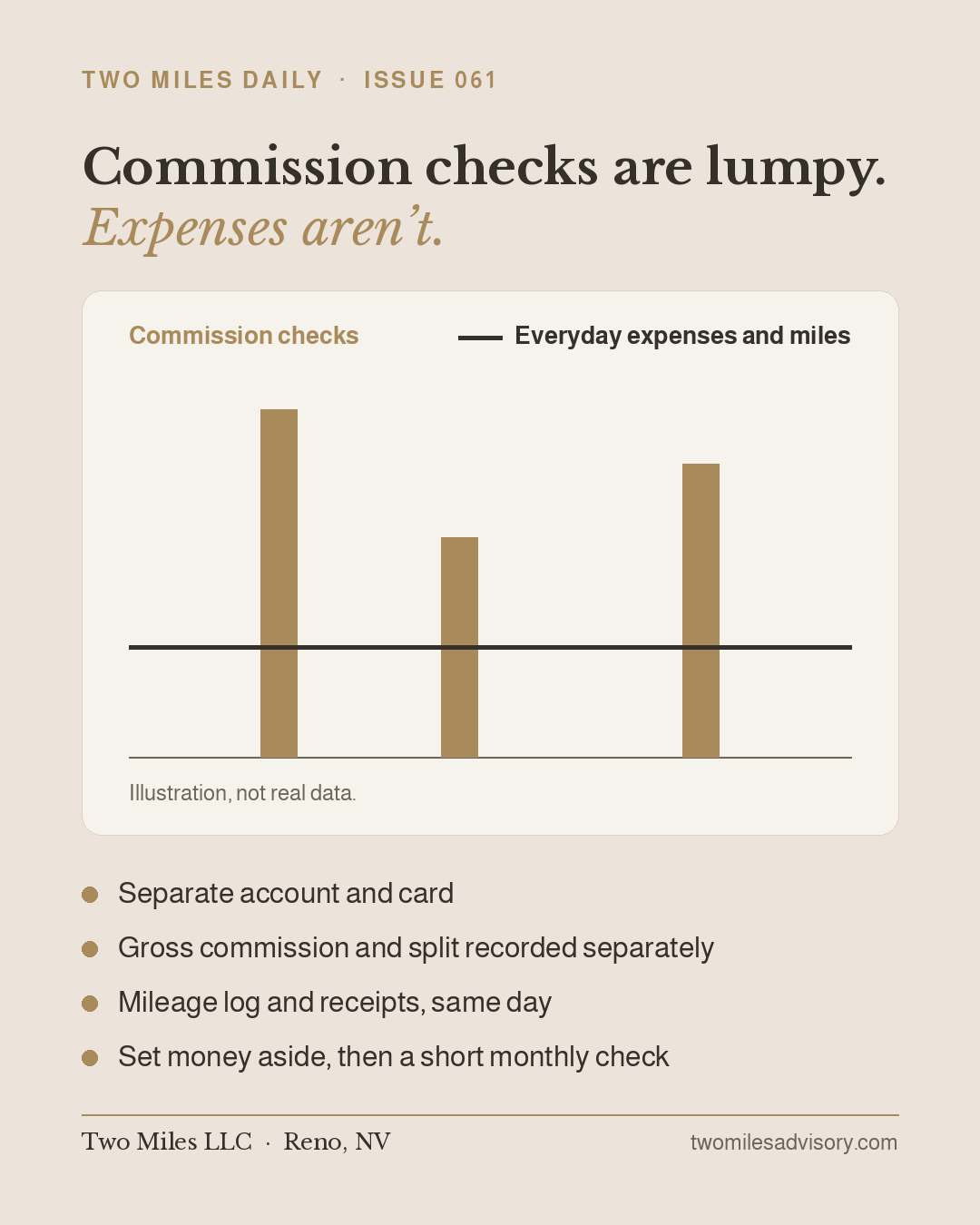
Real estate income is lumpy. A commission check lands, then nothing for weeks. But the expenses keep coming: association and MLS dues, brokerage or transaction fees, listing photos, signs, ads, staging, client gifts, your CRM and e-signature subscriptions, your phone, and a lot of miles.
When income is that uneven, it's easy to let tracking slide during the busy stretches and forget about it during the slow ones.
Hypothetical: an agent closes three deals over the summer, then October gets quiet. In April, they try to rebuild the year from bank statements and memory. Most charges can be found. The miles are the hardest to rebuild. Nobody remembers which Tuesday they drove to Fernley for a showing.
Here's a simple system that holds up:
Separate account and card. Run every business expense and every commission deposit through them. This one step makes everything after it easier.
Record the full commission, not just the check. If your brokerage takes its split and fees before paying you, record the gross commission and the split and fees as separate lines, and keep your closing statements. Then you can reconcile your books to what the brokerage reports to you, whichever way they report it.
Keep a mileage log as you go. An app or a notebook in the car: date, where, why, miles. Writing it down that day is far easier than reconstructing it later.
Snap receipts the same day. Especially for cash, gifts and anything bought on the run.
Set money aside from every check. If you're paid as an independent contractor, taxes usually aren't being withheld. Ask your tax preparer how much to set aside and when estimated payments are due, then move that amount the day the check clears.
Do a short monthly check (about 20 minutes for most agents). Categorize, match receipts, and confirm every closing is recorded.
Which expenses are deductible, and how, is a question for your tax preparer. My job is making sure the records are complete, organized and ready, so that conversation is short. Client gifts, for example, have deduction limits, so ask your preparer before assuming a gift is fully deductible.
The best time to start is between closings, whenever that is for you.
If you're an agent and your records are scattered across three apps and a glove box, send me a message through the Contact page. I'm glad to help you set up something simple that you'll actually keep up with.
— Rachel, Two Miles LLC